
Travel Intelligence · 2026-09-03 · 8 min read
When Is the Best Time to Visit Indonesia? It Depends on the Journey
There is no single best month for travelling across Indonesia. Weather, sea conditions, landscapes, crowds and the purpose of your journey all matter—and they do not follow exactly the same calendar everywhere.
By Laksanava Team
Ask when to visit Indonesia and you will often receive a reassuringly simple answer:
Come in the dry season.
It is not entirely wrong.
For many journeys—particularly across parts of Java, Bali and Nusa Tenggara—months with lower rainfall can make outdoor plans easier. Roads, walking, viewpoints and days spent moving between places may all benefit from more settled conditions.
But Indonesia stretches across thousands of islands and several different climate patterns.
The answer becomes less useful once the next question is asked:
The best time for what?
A traveler planning temples and food in Java does not necessarily need the same conditions as someone diving in Raja Ampat, crossing Flores, hiking in the mountains or spending most of a week in a city.
The best time to visit Indonesia is not one month.
It is a match between place, purpose and traveler priorities.
Start with the scale of Indonesia
It helps to stop thinking about Indonesia as though it has one national weather calendar.
Broadly, many destinations—including much of Java and Bali—experience a more distinct wet and dry pattern, with drier conditions often occurring around the middle of the year.
Nusa Tenggara generally has a pronounced dry period too.
Other parts of the archipelago behave differently. Rainfall patterns can vary substantially across Sumatra, Kalimantan, Sulawesi, Maluku and Papua, and some areas do not fit neatly into a simple six-month wet versus six-month dry division.
Even within one season, weather is not uniform.
One island can be relatively dry while another region remains wet. Mountain weather can differ from the coast. A rainy-season day is not necessarily a day of continuous rain, just as a dry-season day is never a guarantee of clear skies.
So a useful Indonesia itinerary starts with the actual regions being visited rather than a nationwide rule.
Dry season can be useful—but it is not automatically “best”
There are clear reasons travelers often prefer drier months.
Walking around archaeological sites may be easier.
Mountain or countryside journeys can be simpler to organize.
Boat journeys may benefit when local sea and weather conditions are favorable.
Road travel can be more predictable when heavy rain is less frequent.
Photography plans may also be easier when the traveler is hoping for particular light or visibility.
But drier conditions bring trade-offs too.
Landscapes may look more brown than green in places with pronounced seasonal change. Days can feel hotter or dustier. Popular destinations can coincide with periods of strong visitor demand.
And a dry-season label still cannot guarantee the weather on a particular Tuesday afternoon.
“Dry season” is useful planning context.
It is not a promise.
Wet season does not mean the journey stops
The opposite simplification causes just as many problems.
Rainy season does not automatically mean a destination should be avoided.
A traveler interested in food, museums, architecture, cities or cultural experiences may be less dependent on an uninterrupted day of clear weather than someone planning a mountain trek or several days on small boats.
Rain can also change the character of a landscape.
Vegetation may be greener. Rivers and waterfalls may look different. A destination can feel quieter at particular times, although visitor patterns depend on holidays, events and the destination itself rather than weather alone.
The important difference is often flexibility.
If an itinerary is built so tightly that one period of heavy rain destroys the entire day, wetter conditions become a major problem.
If there is room to change the order of activities, stay longer somewhere, or move an outdoor visit to another part of the day, the same weather may be manageable.
The wet season is not automatically bad travel.
It simply changes what the itinerary needs to tolerate.
For marine journeys, look at the sea—not only the season name
Indonesia makes the limitations of a national “dry season” rule especially obvious once the journey moves onto the water.
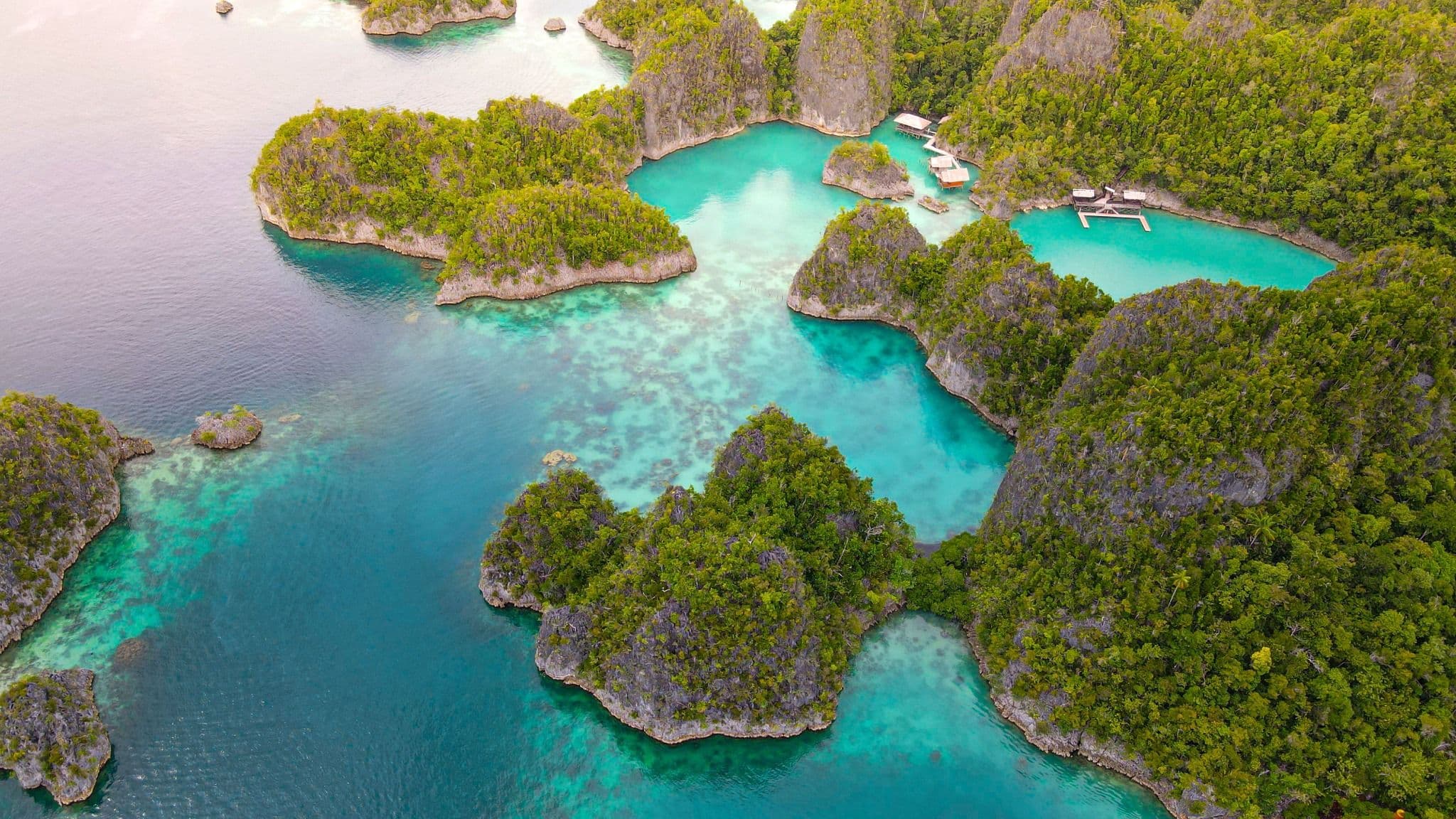
Raja Ampat is a good example.
For marine activities in several parts of Raja Ampat, the period around October to April is often considered useful for planning because sea conditions can be more favorable.
That timing is almost the reverse of the simple dry-season advice travelers often hear for Java and Bali.
And even there, a calendar is only the beginning.
Wind, waves, currents, rain and underwater visibility can change. Conditions suitable for diving may not be identical to those preferred for snorkeling or long-distance island hopping.
Marine travel therefore needs another question:
What conditions does this particular activity require?
For a diving journey, a useful answer may come from seasonal marine patterns, the specific dive area and current advice from experienced local operators.
For a boat-based journey, sea state may matter more than whether a weather app shows a rain icon.
Komodo and Flores ask a different question again
Across Flores and the Komodo region, the drier part of the year is often attractive for journeys combining boats, trekking and landscapes.
But even here, “best” depends on what the traveler hopes to see.
A landscape during or soon after wetter months can have a different visual character from the same hills later in a long dry period.
A traveler prioritizing trekking may think first about rain, heat and walking conditions.
Someone building a marine-focused itinerary needs to think about the sea.
A photographer may care about the appearance of the landscape.
Another traveler may simply prefer a period outside the busiest travel windows.
Same destination.
Different definitions of good timing.
Hiking is about more than avoiding rain
For hiking and volcanic landscapes, lower rainfall can be an advantage.
Trails may be less muddy, views may be clearer, and an early start can be easier to plan when the weather pattern is relatively stable.
But dry weather does not remove every difficulty.
Exposed terrain can become hot. Dust can increase. Water and shade can matter more. Conditions at altitude may differ sharply from conditions at the nearest city.
And in Indonesia, access to volcanic or protected natural areas can also change for reasons that have nothing to do with the normal seasonal calendar.
Weather forecasts, official access information and local safety guidance should therefore be checked close to the actual journey.
Choosing a traditionally favorable month does not replace checking current conditions.
Cultural and city journeys can use a wider calendar
Not every journey needs perfect outdoor weather.
If the priority is Yogyakarta's cultural landscape, museums, food and heritage, a traveler may reasonably accept occasional rain.
The same can apply to city journeys elsewhere in Indonesia where cafés, galleries, markets, architecture and food are part of the experience.
Weather still matters.
Heavy rain can affect traffic, walking and outdoor plans.
But it may be one consideration among several rather than the deciding factor.
This is useful because it gives travelers more choice.
Instead of asking only which months are driest, they can balance weather against crowd preference, available travel dates, events and the kind of days they actually want to have.
Crowds have their own calendar
Weather is only one form of seasonality.
Popular destinations can also become busier around domestic holiday periods, school breaks, major festivals or international travel peaks.
That means a month with excellent weather may not necessarily provide the atmosphere a traveler prefers.
Some people enjoy energy and activity.
Others would trade a slightly higher chance of rain for quieter streets or more flexibility.
Neither preference is wrong.
The important point is that best weather and best overall timing are not always the same thing.
When crowd levels matter, check the holiday and event calendar for the actual year of travel rather than relying on a permanent rule.
Landscapes change with the season
There is another reason not to treat weather only as an obstacle.
Seasons alter the place itself.
A dry landscape in Nusa Tenggara can have a very different colour and mood from the same landscape during greener months.
Rice-growing landscapes change through agricultural cycles that do not exist merely for photography.
Waterfalls, rivers, forests and mountain views can all present different conditions across the year.
So the question may not be:
When will this place look best?
A better question is:
Which version of this place am I hoping to experience?
That distinction also encourages a little humility.
Landscapes are living environments, not sets arranged for travelers.
Their seasonal rhythms belong to agriculture, ecosystems, water and local life before they become part of a travel photograph.
Climate patterns are not fixed appointments
Historical patterns are useful.
They tell us what has tended to happen.
But a season is not an appointment that the atmosphere is required to keep.
Indonesia's rainfall is influenced by regional monsoon patterns as well as larger climate drivers, and individual years can arrive earlier, later, wetter or drier than their long-term averages.
That is why planning should happen at two levels.
First, use the normal seasonal pattern to choose a broadly sensible travel window.
Then, closer to departure, check the latest official weather and climate information for the specific regions in the itinerary.
The farther ahead the journey is planned, the more important this distinction becomes.
Ask “best time for what?”
Before choosing dates, try answering five questions:
- Where exactly are you going? Indonesia is too large for one weather rule.
- What is the journey built around? Diving, hiking, culture, food, cities and landscapes need different conditions.
- How weather-dependent is the itinerary? Can activities move if conditions change?
- How do you feel about crowds? Popular travel periods may offer good weather but a different atmosphere.
- Which trade-offs matter to you? Clearer weather, greener landscapes, quieter travel and fixed holiday dates may point toward different months.
Once those questions are answered, “the best month” becomes much easier to discuss.
The best time is the time that fits the journey
There is nothing wrong with using dry and wet seasons as a starting point.
They are useful.
The mistake is turning them into a verdict.
Indonesia is too geographically varied, and travelers want too many different things, for one month to be universally best.
A diving journey may follow the sea.
A mountain journey may follow rainfall and trail conditions.
A cultural journey may tolerate weather that another itinerary cannot.
A short first visit may prioritize reliability.
A return journey may intentionally choose a different season to see a familiar place another way.
So when someone asks:
When is the best time to visit Indonesia?
Perhaps the most useful answer is another question:
What do you want the journey to make possible?