
Craft · 2026-09-03 · 7 min read
Reading a Place with Context
A place changes when we understand something about it. History, belief, landscape, architecture and everyday customs can turn what we see into something we begin to understand.
By Laksanava Team
It is possible to stand in front of something extraordinary and understand almost nothing about it.
A temple can be beautiful before we know who built it or why.
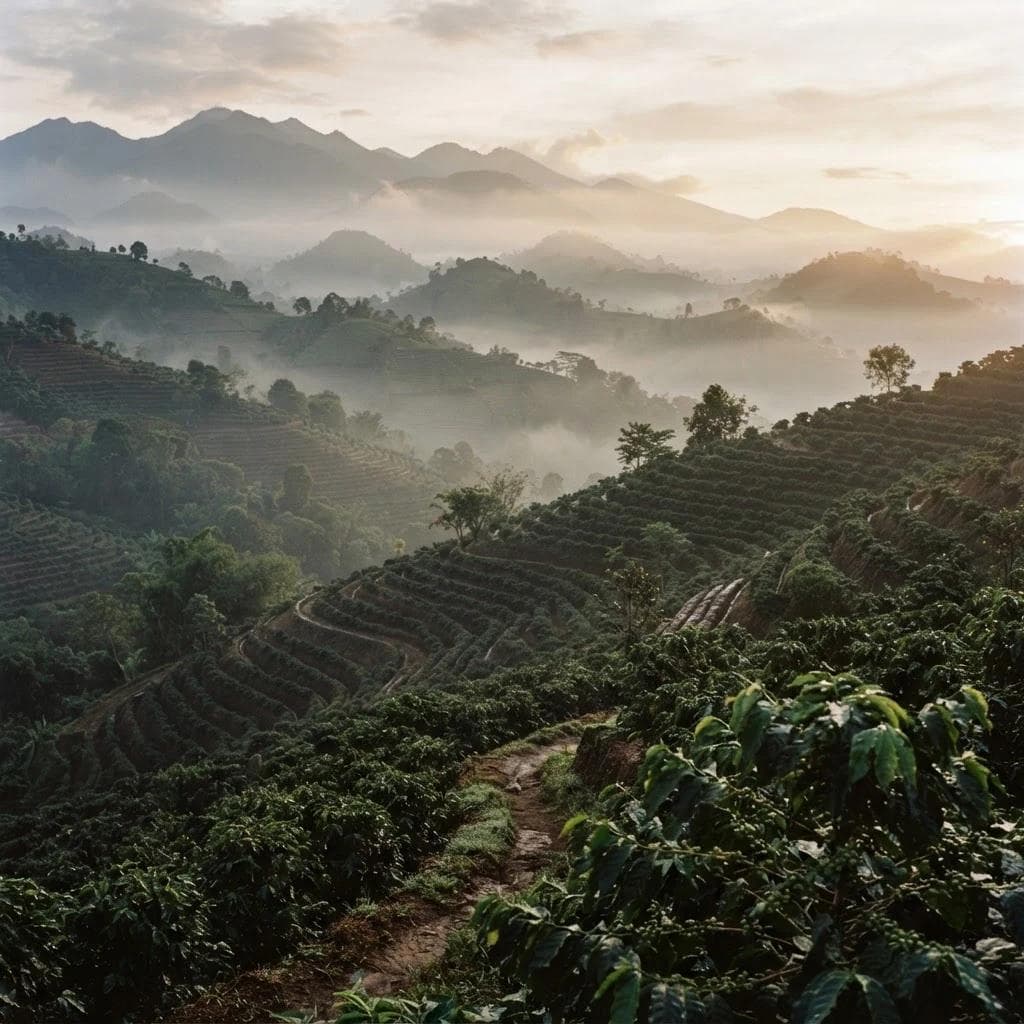
A rice terrace can be picturesque without revealing the system of water, community and belief that helped shape it.
A street can seem ordinary until someone explains why it runs where it does.
Travel begins with seeing, but seeing is only one layer of a place.
Context adds another.
It does not mean becoming an expert before arriving. Nor does every meal, building or landscape need to become a history lesson.
Sometimes a few well-chosen pieces of information are enough to change what we notice.
Context gives the eye somewhere to look
Without context, we often notice what is immediately impressive.
Scale. Colour. Age. Ornament. A dramatic view.
Once we understand something about a place, different details begin to matter.
At Prambanan, for example, the temples can first be experienced simply through their extraordinary architecture. But knowing that reliefs on the Hindu temples illustrate the Ramayana changes the act of looking. Stone panels that might otherwise appear primarily decorative begin to read as part of a narrative.
The wider Prambanan Temple Compounds also include both Hindu and Buddhist monuments.
That does not mean a visitor suddenly understands centuries of Javanese religious history after reading a short explanation.
It simply means the site is no longer only a collection of impressive structures.
There are more questions to ask.
What stories are being told? Why are particular figures represented? How were these spaces used? What has changed since they were built?
Context makes curiosity more specific.
Landscapes are not always just scenery
The same principle applies beyond monuments.
Some landscapes look natural or timeless even though people have shaped them for generations.
Bali's rice terraces are an example.
Their visual appeal is obvious. But within Bali's UNESCO-listed cultural landscape, rice fields, canals, water temples and farming communities form parts of the subak system, a cooperative approach to water management connected with the philosophical concept of Tri Hita Karana.
Knowing this changes the view.
A terrace is still beautiful.
But it is also part of a working landscape—one connected to agriculture, water, community organization and religious life.
This does not provide a single explanation for Bali, and it should not become one.
Places are more complicated than one cultural concept.
The value of context is not that it gives us a master key.
It gives us another layer.
Sometimes the shape of a city carries meaning
Context can also change the way we understand urban space.
In Yogyakarta, landmarks that may initially seem separate are connected within a historic north-south axis.
The Kraton sits within this arrangement, with the axis positioned in relation to Mount Merapi and the Indian Ocean. The layout reflects Javanese ideas about the cosmos and human life, shaped through a long interaction of cultural and religious influences.
A traveler does not need to memorize the philosophical vocabulary behind the axis to benefit from knowing that it exists.
The important shift is simpler.
The city is no longer only a sequence of traffic lights, monuments, markets and palace walls.
Its spatial relationships begin to mean something.
A route becomes part of a story.
History is most useful when it changes the present view
There is a temptation to treat historical context as a collection of dates.
When was this built?
Who ruled here?
What happened next?
Those questions matter, but chronology alone is not always what helps a traveler experience a place more deeply.
Useful context connects the past to what is visible now.
Why does this building face this direction?
Why is this material used?
Why does this neighborhood look different from the one beside it?
Why is a particular ceremony held here?
Why does a dish use ingredients associated with this landscape?
Why does one building have several architectural influences?
The best background information does not compete with the experience.
It helps us notice it.
Food carries context too
It is easy to approach food as a checklist of things to try.
Find the famous dish. Photograph it. Taste it. Move on.
But food can open other questions.
What grows in this landscape?
Which ingredients travelled here through trade or migration?
Is the dish connected with daily meals, a particular community, a celebration or a religious occasion?
How has it changed in a city compared with the region where it originated?
We do not need an elaborate explanation every time we sit down to eat.
But knowing even one part of the story can move a dish beyond novelty.
It becomes connected to place.
Context also tells us how to behave
Understanding is not only about making travel more interesting.
Sometimes it tells us when we should adjust our own behaviour.
A place that appears to visitors as an attraction may also be an active place of worship.
A ceremony may be part of living religious practice rather than a performance arranged for an audience.
A historic building may still have social, political or spiritual meaning to the people who use it.
This is where context becomes practical.
Appropriate dress, access, photography and behaviour vary from place to place. The useful approach is not to memorize one universal code of cultural etiquette.
It is to pay attention.
Read the guidance at the site.
Follow current local rules.
Listen to custodians, guides and community instructions.
And when something is unclear, ask before assuming.
Respect becomes easier when we understand that we are not always entering spaces created primarily for us.
Be careful with the idea of “local culture”
Context can deepen travel, but it can also be handled badly.
Cultures are not fixed personalities.
A city of millions does not have one opinion.
A community is not a museum exhibit.
And traditions do not stop changing simply because visitors find an older version more picturesque.
Statements such as “the Balinese believe…” or “Javanese people always…” may sound informative while hiding enormous differences between people, generations, places and circumstances.
Better travel writing—and better travel conversations—leave room for complexity.
We can describe a documented tradition without claiming that every individual follows it.
We can explain the significance of a place without pretending to speak for the people who live there.
We can acknowledge cultural patterns without turning them into stereotypes.
Context should make a place feel more human, not less.
Ask better questions
You do not need to study for weeks before every journey.
A few questions can be enough to begin.
What happened here that helps explain what I am seeing?
Is this place still used for the purpose it was created for?
Who maintains it?
What should I understand before entering?
Is the landscape entirely natural, or has it been shaped by generations of human work?
Is there a story behind the architecture, food or street pattern?
And whose explanation am I listening to?
Official cultural institutions, museums, site managers, knowledgeable local guides and well-researched scholarship can all provide useful starting points.
Context is strongest when its source is clear.
Leave room to look before explaining everything
There is another side to this.
Too much information can crowd out the experience itself.
A traveler does not need to listen to a lecture while watching every sunset.
A sculpture can be encountered before reading the label.
A market can first be heard, smelled and observed.
Sometimes the right sequence is simply:
Look.
Notice.
Then learn.
The goal of context is not to fill every silence with facts.
It is to make the facts we do learn useful.
From seeing to understanding
Travel cannot give us complete knowledge of a place.
A few days—or even many visits—do not make us insiders.
But we can leave understanding more than when we arrived.
A temple can become more than its silhouette.
A rice terrace can become more than a photograph.
A street can become more than a way of getting from one attraction to another.
Context does not remove the pleasure of simply looking.
It often gives us more to look at.
And perhaps that is one of the quiet shifts that thoughtful travel can make:
not only asking,
What am I seeing?
but also,
What would help me understand what I am seeing?