
Indonesia · North Sumatra
Lake Toba & Samosir — Into Batak Country
Lake Toba draws the eye with scale; Samosir gives the journey its depth. Move slowly through water, highland roads and Batak Toba cultural landscapes where villages, craft and everyday life matter as much as the view.
Lake Toba commands attention with scale. Samosir rewards a longer stay: villages, houses, woven ulos, food and everyday Batak Toba life give the caldera landscape a human depth that a viewpoint alone cannot.
Begin with the lake, then look beyond it
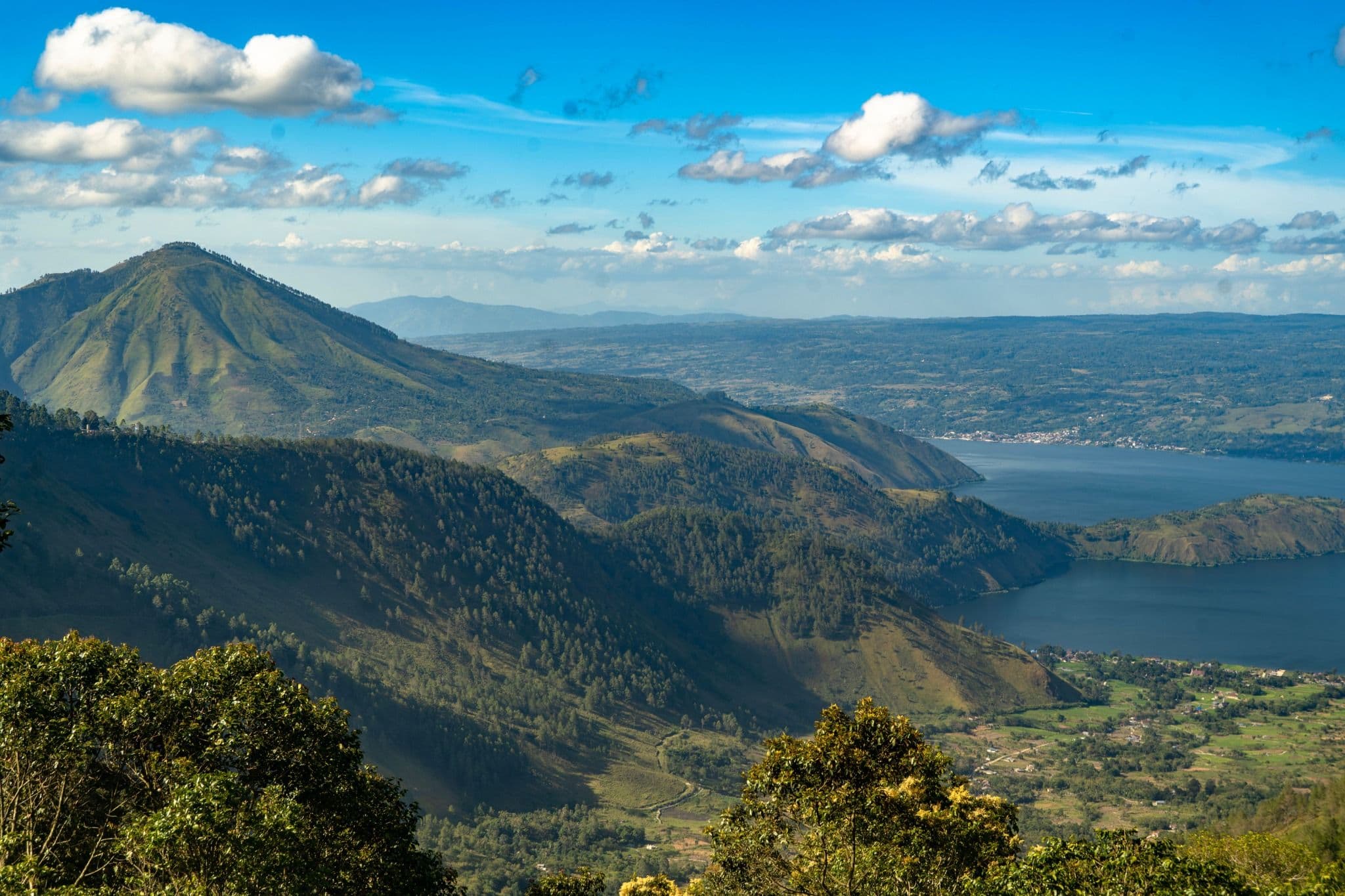
The first impression of Lake Toba is scale. Water fills the horizon, roads rise and fall around the caldera, and Samosir seems to occupy a landscape large enough to have its own weather. That sense of scale has a geological origin: the Toba Caldera was shaped by an enormous eruption roughly 75,000 years ago and is now recognised as a UNESCO Global Geopark.
The geology is extraordinary, but it should not be the whole story. A quick stop at a viewpoint can show you the lake. A journey with more time begins to show what has grown around it — settlements, fields, food traditions, craft, architecture and ways of life shaped by a highland landscape and generations of Batak communities.
Samosir: the cultural centre of the journey
Samosir is often described as the heart of Toba Batak culture, and that distinction matters. “Batak” is not one uniform identity. The wider Toba region is connected with several Batak communities, each with its own histories and cultural expressions. On Samosir, this journey is most specifically about Batak Toba context.
Staying on the island changes the pace. Water crossings become part of the experience rather than a logistical interruption. Roads connect lakeside settlements, villages and higher ground. Instead of trying to circle Samosir as a sequence of highlights, it is more rewarding to choose a comfortable base, move out slowly, and let the day hold fewer but better-understood encounters.
Read a village as a living place
Traditional huta, wooden houses and gorga carvings can be visually striking, but they are not stage design. Places such as Huta Siallagan carry histories that are still interpreted for visitors, while heritage settlements such as Huta Simarmata also sit within the life of present-day communities. That difference should shape how you arrive.
A thoughtful visit leaves room for explanation and permission. Learn what a space was used for before photographing it. Follow local guidance around homes, graves, ceremonies and community activity. If a performance or ritual form is encountered, understand it in context rather than treating it as entertainment that exists on demand. The point is not to collect “traditional” images; it is to read a place with enough care that the architecture and stories begin to make sense.
Ulos: more than a textile
Ulos is one of the most visible expressions of Batak Toba culture, but its meaning runs far deeper than pattern and colour. Indonesia’s cultural-heritage register recognises Ulos Batak Toba as intangible cultural heritage, and the cloth has social and ceremonial roles connected with relationships and important moments in life.
That makes a weaving encounter more interesting when the maker and context remain central. Ask how a piece is made, what distinguishes one cloth from another, and how particular forms are used. If you choose to take an ulos home, understanding what you are buying is part of the journey. The object carries more meaning when it is connected to the people, skill and cultural language behind it.
Taste, sound and the everyday
Culture is not confined to heritage sites. It can appear at the table, in a market, in conversation, in music heard across a village, or in the ingredients that make a meal unmistakably local. Andaliman, a spice closely associated with Batak cooking, is one small example of how landscape and food meet.
These quieter experiences keep the journey from becoming a museum circuit. A long lunch, time to talk with a host, or an afternoon with no major landmark can reveal as much as a named attraction. The best days on Samosir often feel connected rather than crowded: landscape, food, people and history reinforcing one another instead of competing for attention.
Let movement be part of the experience
Reaching and moving around Lake Toba involves choices. Depending on where you begin, the journey may combine a flight, a substantial road transfer and a lake crossing. Ferry routes such as Ajibata–Ambarita are important parts of Samosir access, but operating hours, ticket procedures and trip frequency can change. Flight availability can change too.
That is a reason to plan with space rather than precision theatre. Build buffer around crossings. Avoid stacking a long transfer directly against a flight when the itinerary does not need to. On Samosir, resist the urge to measure the day by kilometres covered. The lake is large, roads are part of the experience, and an unhurried crossing or roadside pause can be as memorable as the destination at the end of it.
Plan around conditions, not a perfect postcard
Lake Toba is a highland environment, and weather is part of its character. Visibility, rain and road or crossing conditions can shift, so a thoughtful plan should not promise blue skies or build the entire journey around one “perfect” viewpoint. Current BMKG forecasts and current transport information are more useful than a timeless claim about the best month to visit.
The same caution applies to cultural calendars. Festivals, ceremonies and community events should only enter a traveller’s plan when dates and visitor access have been confirmed. A living culture does not exist to match an itinerary, and flexibility is often what allows the most meaningful encounters to happen respectfully.
Shape a journey with depth
Lake Toba and Samosir suit travellers who want scenery with context: a broad landscape, but also the time to understand a house, a piece of cloth, a meal or a village beyond its surface. The journey can lean more toward culture, quiet road travel, food, photography or simply time beside the water, but it works best when none of those elements is rushed into a checklist.
The lake may be what first brings you here. Give Samosir enough time, and the deeper memory is likely to be the relationship between landscape and people — the feeling that the caldera is not merely something to look at, but a place that has been lived in, interpreted and carried forward. That is where the journey begins to feel whole.
Planning note
Access, ferry operations, flight availability, road conditions, weather and local visit protocols can change. Verify current operator, authority and community guidance close to travel. This Journey is inspiration and a planning starting point, not a confirmed itinerary or fixed package.
A journey concept is inspiration and a planning starting point. It is not a confirmed itinerary, fixed package, guaranteed departure, or confirmed fare — we shape the details together.