
Indonesia · Sumba, East Nusa Tenggara, Indonesia
Sumba — Between Hills, Villages & Sea
Cross Sumba slowly, where open hills, living villages and the coast are connected by roads that matter as much as each arrival.
There are islands that can be understood from a single base. Sumba is not one of them.
Its character emerges gradually: in the shift from coast to interior, in ridgelines opening beyond the road, in dry grass turning green after rain, and in villages whose houses and stone tombs hold meanings that are not arranged for the visitor’s convenience. The distance between these places is not empty time. It is the thread that allows the island to come into view.
This is why Sumba works best as a journey rather than a collection of saved locations. A beach may first catch the eye, or a high-roofed village may prompt the trip, but the deeper experience lies in moving carefully between landscapes and allowing each part of the island to change the reading of the next.
The road is part of the story
On a map, it is tempting to join highlights into a neat sequence. On the ground, scale, terrain and road conditions create a different rhythm. A transfer may cross broad hills, cultivated land, small settlements and stretches where the coast feels close but remains out of sight. Stops are not simply interruptions; they can be the moments that reveal how people live with the land.
That rhythm asks for restraint in planning. Packing every day with distant points can turn Sumba into a succession of long arrivals. A more thoughtful shape gives each area enough time: room for an early start without rushing the rest of the day, for a village visit that follows the host’s pace, or for a coastal afternoon that remains flexible when weather changes.
The island also resists a single visual identity. Rain can soften hills into deep green; drier periods can expose the contours of grassland in gold and brown. Neither is the definitive Sumba. They are different expressions of the same landscape, and the better season is the one that matches the traveler’s priorities and the conditions that can responsibly be reached.
Villages are living places
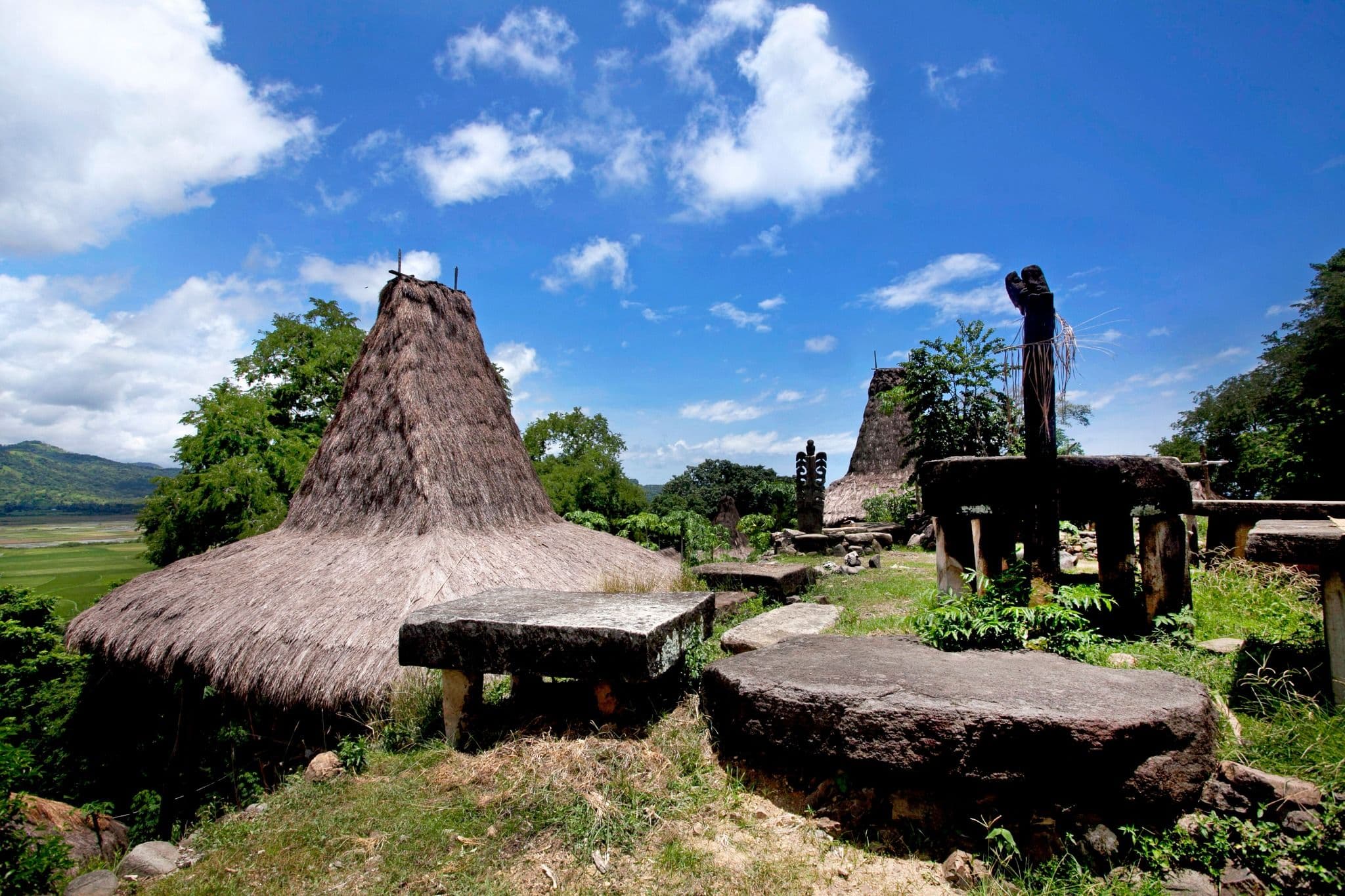
In a number of Sumbanese villages, tall thatched roofs rise above houses arranged around shared space and megalithic tombs. These forms are visually striking, but they are not stage sets. Houses, ancestral relationships, clan life and ritual practice can be closely connected, with meanings that differ between communities and parts of the island.
Marapu, often referenced in descriptions of Sumba, should be approached as a living ancestral belief tradition and contemporary community—not as folklore available on demand. Not every resident shares the same belief or practice, and a brief visit cannot make an outsider an authority on it. What a traveler can do is arrive with curiosity, listen to the person receiving them, and accept that some spaces, ceremonies or images may not be open to visitors.
The practical gestures matter. Arrange visits through people who have a real relationship with the community. Ask before photographing residents, houses, tombs or rituals. Dress and move in a way that respects local guidance. If a contribution or local fee applies, clarify it before the visit rather than treating it as an afterthought. Most importantly, do not make ceremonial access the condition for a “successful” day. Community life does not run to a visitor timetable.
Cloth, horses and the limits of a quick explanation
Sumba’s woven textiles are another point where looking slowly matters. Ikat is often presented as a beautiful object—and it is—but the cloth may also carry local knowledge, labour, status, exchange and identity. Motifs, materials and methods are not identical across the island. Meeting a weaver or visiting a workshop can add context, especially when the encounter makes space for the maker to explain what can be shared.
The same caution applies to horses, one of Sumba’s most recognisable images. Their presence has cultural and practical dimensions that cannot be reduced to a dramatic photograph on an empty beach. A thoughtful journey asks who owns and cares for the animals, how an activity is managed, and whether the experience respects both local practice and animal welfare.
These encounters do not require the traveler to master every layer of meaning. They ask for something simpler and more useful: a willingness to recognise that the island already has its own relationships, long before the journey arrives.
Where hills meet the sea
Sumba’s coast provides contrast rather than a final reward. Cliffs, broad beaches, river mouths and coves appear in different forms around the island, and conditions can change with rain, tides, swell and local access. A place that looks calm in an image is not automatically safe for swimming; a waterfall seen at one point in the year may feel entirely different at another.
This is where flexible planning becomes part of responsible travel. Local advice should decide whether a route, beach or water experience is appropriate on the day. A slower plan can substitute a village conversation, a walk, a weaving visit or an unhurried meal when conditions close another option. The journey remains meaningful because it was never dependent on one guaranteed photograph.
Shaping a Sumba journey
A Sumba journey can be shaped around one part of the island or connected across several areas. The right form depends on available time, arrival and departure points, comfort with road travel, preferred pace, and the balance between coast, culture and interior landscape.
Travelers drawn mainly by beaches may still benefit from time inland, where the road reveals a more complete geography. Those interested in villages and textiles should avoid scheduling multiple community encounters as if they were museum appointments. Families or travelers who prefer gentler days may need shorter movements and more margin. Photographers should plan around permission and relationship, not only light.
Seasonality should be treated as a planning variable rather than a promise. Rainfall influences road conditions, vegetation, water levels and the feel of the coast, while individual years do not follow a perfectly fixed calendar. Flight routes, local access and weather information can also change. These details belong in a current planning conversation, checked against BMKG information and reliable local guidance near the travel date.
The most convincing version of Sumba is not the one that covers the greatest distance. It is the one that allows the road, the hosts and the landscape to set a human pace. Come for the hills, villages or sea if one of them first calls you. Leave enough room for the spaces between them to become the journey.
Plan this journey
Tell LAKSANAVA what draws you to Sumba—landscape, village context, textiles, coast, or simply the wish to travel more slowly. We can help shape the journey around your pace and priorities, then verify current access and planning conditions before the details are confirmed.
A journey concept is inspiration and a planning starting point. It is not a confirmed itinerary, fixed package, guaranteed departure, or confirmed fare — we shape the details together.